01
A roaming mic breaks the moment.
For an audience member to speak, someone crosses the room with a microphone. The pace drops, and so does the magic.
Briquemault links a venue’s cameras, microphones, speakers and lights into a single system. It sees what happens on stage and in the audience, and puts every sound and every light in the right place, at the right moment.
In developmentDesigned to integrate with
For an audience member to speak, someone crosses the room with a microphone. The pace drops, and so does the magic.
Sounds follow a timeline, not what actually happens. When the performer improvises or moves, the sound stays where it was.
Placing dozens of sound objects by hand, cue by cue, takes days of work and a specialist at every performance.
Briquemault does not replace your hardware. It makes it work together, at the pace of the show.
Fixed or PTZ cameras, in infrared when it is dark, track performers with nothing to wear, locate the audience as anonymous positions and detect key moments: an object raised, a gesture, an entrance.
Briquemault locates in 3D the volunteer the camera designates and sends that point to a steerable ceiling mic array, which aims its beam at them. They speak from their seat, and the whole room hears them.
Briquemault drives your immersive sound system over ADM-OSC. An audience member’s voice comes from their seat, an effect crosses the room, the sound follows the performer into the audience.
Claude, Anthropic’s AI, reads the show’s cue list and connects what the cameras see to the right sound cues. When the performer improvises, it adapts. The sound operator talks to it like to a stage manager.
Lights follow the performers and PTZ cameras frame the action on their own. The same installation films the show from several angles.
A voice whispers a clue that only one audience member hears. The whole room watches them react.
The card vanishes from the magician’s hand. Its sound flies over the audience and lands in row 8.
Anyone can answer. Their voice fills the room, and it comes from them.
The mentalist guesses a word, and the sound of the reveal comes from the exact seat of the spectator.
The performer walks into the audience. Their voice follows, row after row.
A room that sees, hears and understands its show becomes an instrument. Here are a few ideas; yours will go further.
The storm breaks above the front row, then spreads across the whole room, row by row.
Invisible footsteps cross the audience, stop behind one person, then move on.
The audience raises hands: the camera counts, and the show picks what comes next, live.
A voice answers the performer from the ceiling, picked live from recorded lines according to what they do.
In concert, each instrument sounds from where the musician stands, even as they move.
Two audience members, at opposite ends of the room, hear the same sentence. Nobody else does.
A participant’s question starts from their seat, and the speaker’s answer travels back to them.
Each visitor triggers the story of the work they stop in front of, with no headset or button.
Nothing is fixed: each show builds its own effects in its cue list, combining what the cameras see, what the mics hear and where every sound sits. The operator tunes them in plain language.
Briquemault locates the volunteer in 3D and sends that point to a steerable ceiling mic array, which aims its beam at them. Their voice is then rendered from their seat in the immersive system.
Claude connects what the cameras see to the cue list and arms the right cue, at one of three autonomy levels: suggestion, operator approval, or automatic on authorised cues.
No tags on performers: the venue’s cameras do the tracking. Trackers already installed still work over PosiStageNet.
Infrared invisible to the audience: tracking carries on when the lights go out, exactly when the magic happens.
ADM-OSC, OSC and PosiStageNet in and out, to drive the hardware a venue already owns.
Positions computed on site, no images kept, no facial recognition and no emotion reading. If the AI drops out, the regular cue list carries on.
Briquemault is developed at the Domaine de Briquemault, in the Loiret, in the Crystal Orangery: 400 m² under glass, already rigged with sound and lighting trusses, hosting conferences, seminars, dinners and evening events.
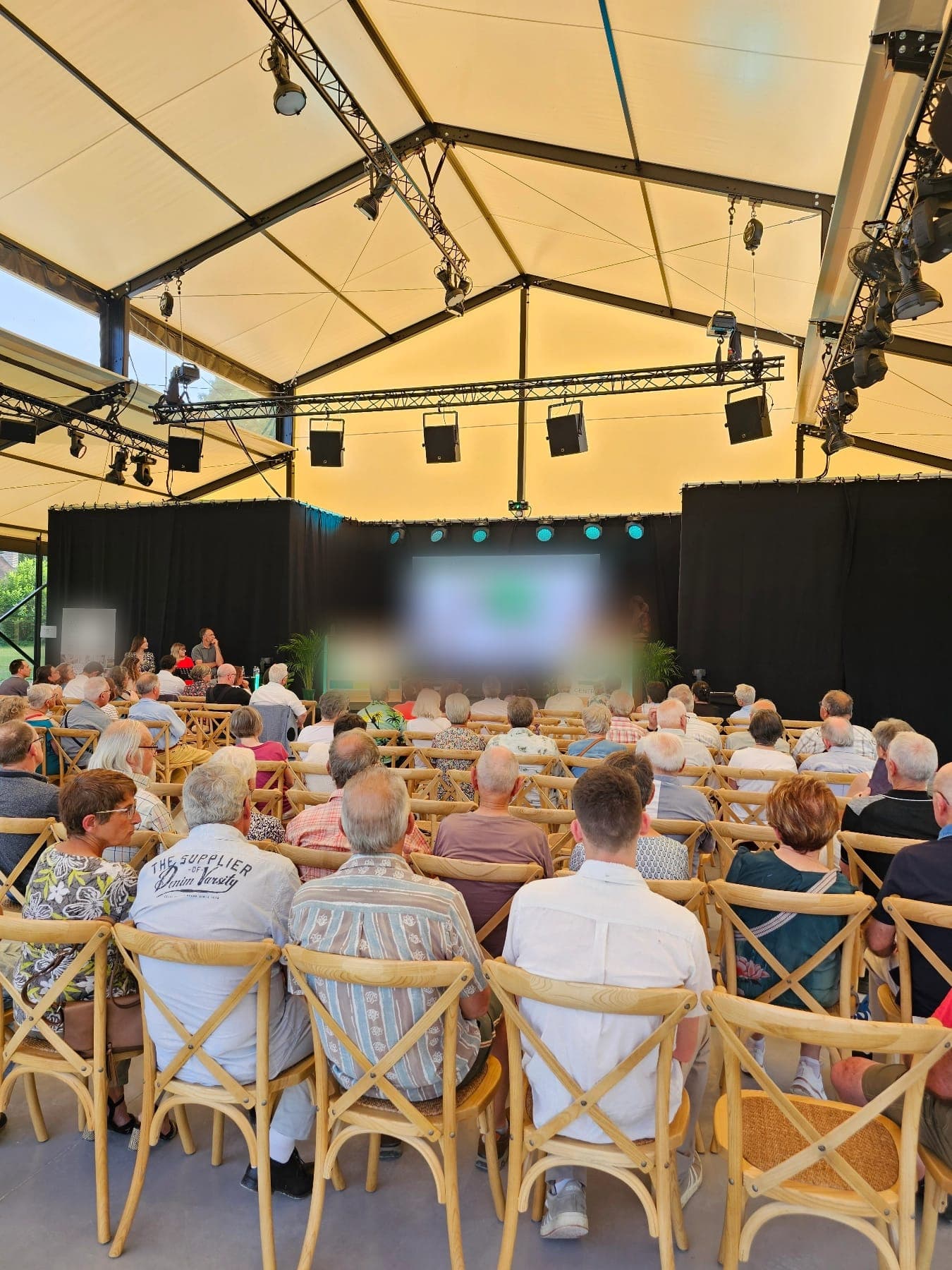
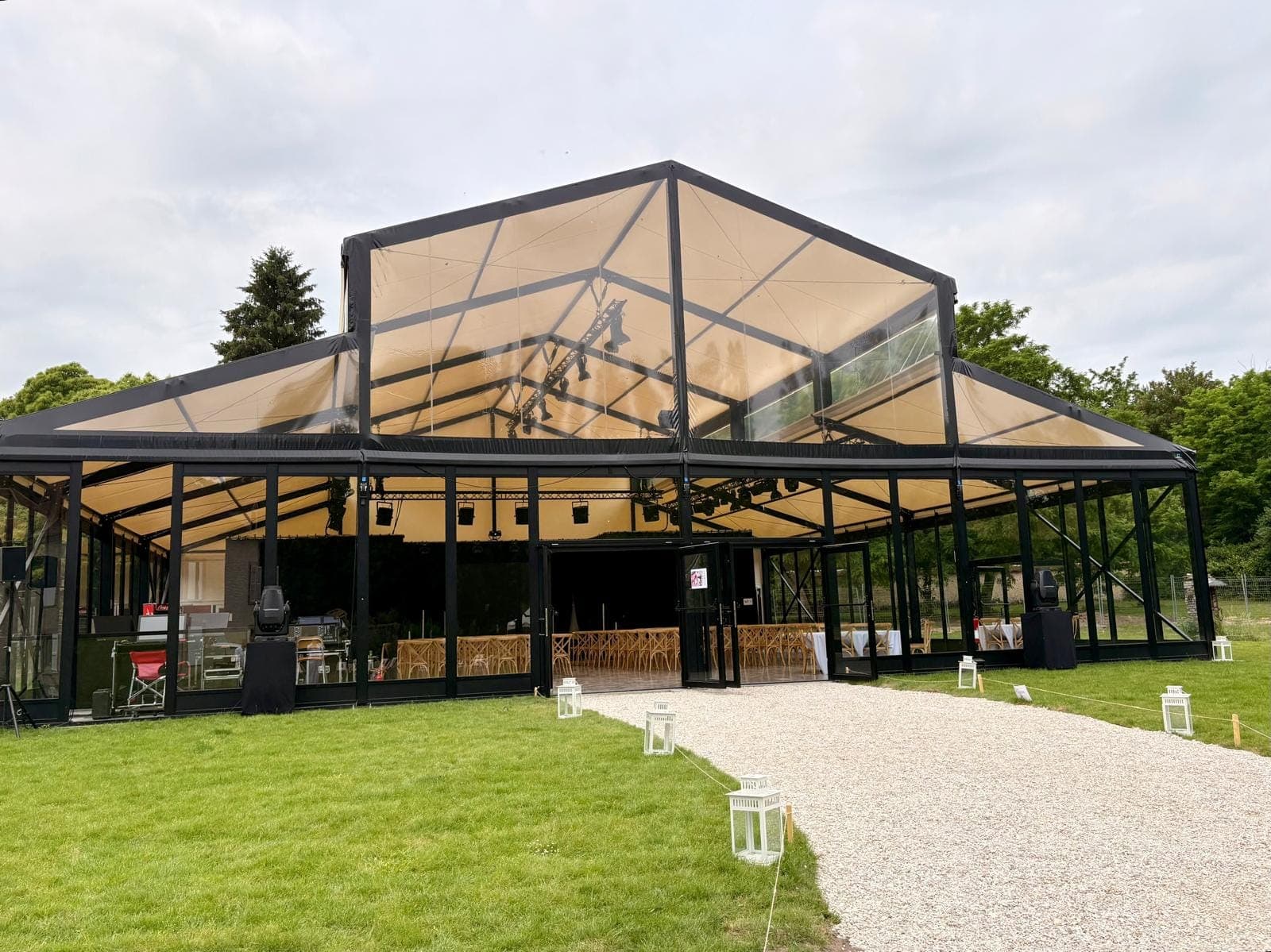
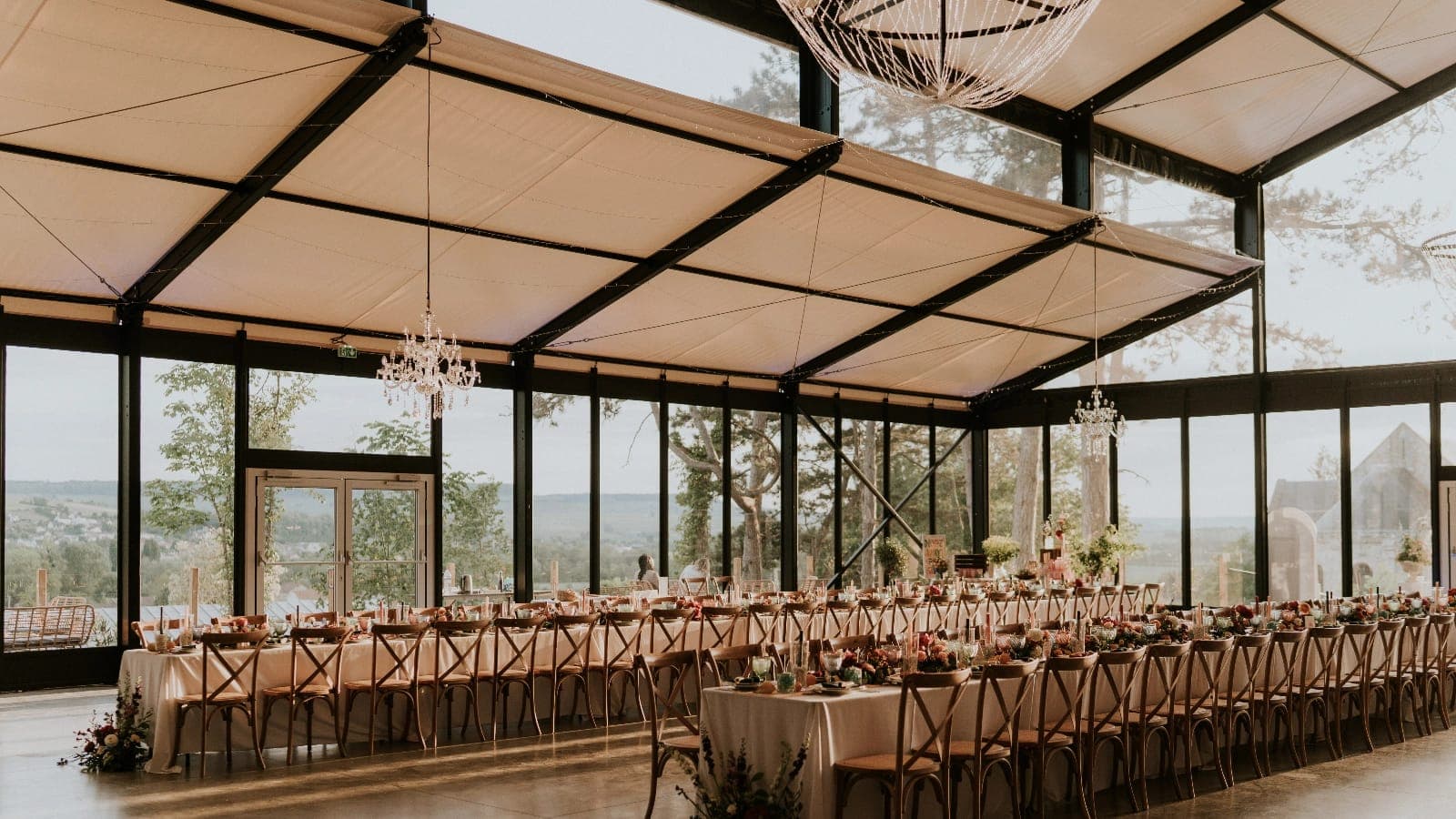
Briquemault is in development: these answers describe its design principles.
Two clocks, never mixed up. Claude decides at cue level, in seconds, before the sound is needed. Tracking and sound rendering run in a local engine, in milliseconds. The AI is never in the audio loop.
The cameras work in infrared, with infrared illuminators the audience cannot see. Show lighting does not disturb tracking.
It is the hardest part, and it is treated as a starting constraint: a narrow pickup beam, speakers near the speaking audience member turned down while they talk, a gain ceiling measured at installation, and a capture-only mode when the room does not allow reinforcement.
The show goes on. Claude acts at the autonomy level the operator chooses: suggestion, approval, or automatic on authorised cues. Every cue has a default behaviour, the operator can take over at any time, and if the AI or the network drops, the local engine carries on with the planned cue list.
The system is designed for privacy: on-site processing, anonymous positions, no facial recognition and no emotion reading, no audience recording by default, a mic that only opens for the chosen moment, and clear notice at the entrance. Every installation goes through a compliance review.
No. Images are analysed on site, then forgotten: nothing is recorded or sent. Only positions and timestamped events come out. Nothing that could reveal a method ever leaves the room.
No. Briquemault is designed to drive object-based immersive systems over ADM-OSC, including L-ISA, and to adapt to what is already there. A venue can start simple and grow.
Tracking and sound run locally. The connection is used for preparation and operator assistance: losing it does not stop the show.
A licence per venue, and a quote for installation when the venue is complex. The simplest is to tell us about your space.
The software, per venue, with updates and support.
For complex venues, we come to install, calibrate and train your team. We can also bring the hardware for an on-site trial, with you.
At Domaine de Briquemault, in the Loiret, on an L-ISA system. By appointment, as development progresses.
“The more the world fills with generated images, the more precious reality becomes. Briquemault does not replace the show with AI: it puts AI at the service of what is real, and makes it invisible.”
Magicians who have run the Agence des Magiciens since 1994, and a technical partner.
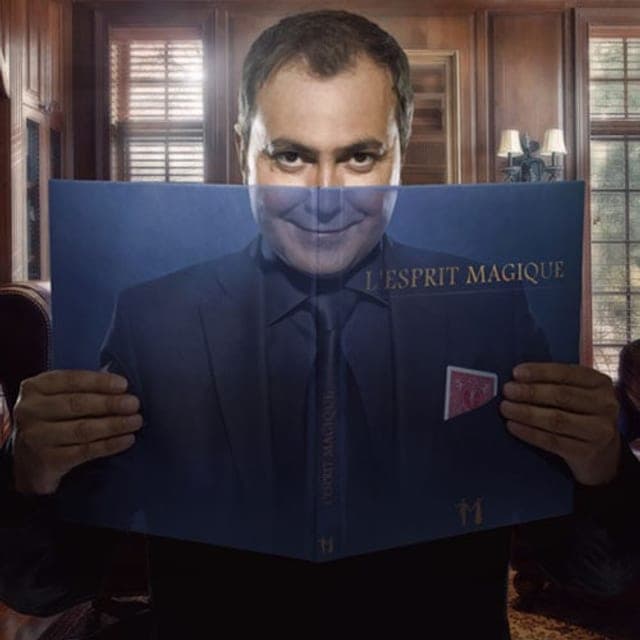
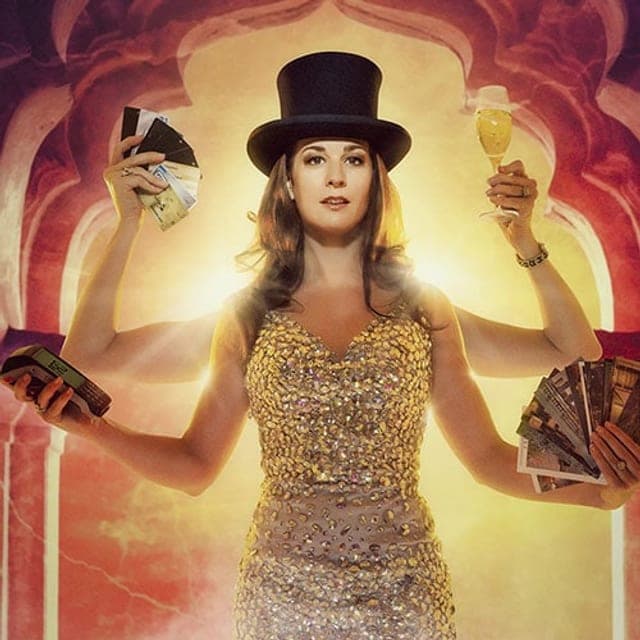
Marie-Odile Langloys, artistic director of the Agence des Magiciens
LinkedIn
Robert-Houdin put electricity to work in his tricks. Méliès, an illusionist, invented the special effects of cinema. Briquemault comes from the same family: magicians building the tool they were missing.
Read the story1845
Robert-Houdin
1888
Méliès
Today
Briquemault